What US Parent's Should Know About Australia's Social Media Restrictions
Australia is introducing a first-of-its-kind ban on social media accounts for kids under 16, and Europe is now moving toward similar protections to reduce online risks like harmful content, grooming, and cyberbullying. This post breaks down what these global changes mean for U.S. families and what steps parents can take to keep their children safer online. It explains the key statistics, the reasoning behind the new rules, and practical guidance for American parents navigating social media with their kids.
Kae David
12/4/20252 min read
Why Australia Is Banning Social Media for Under-16s
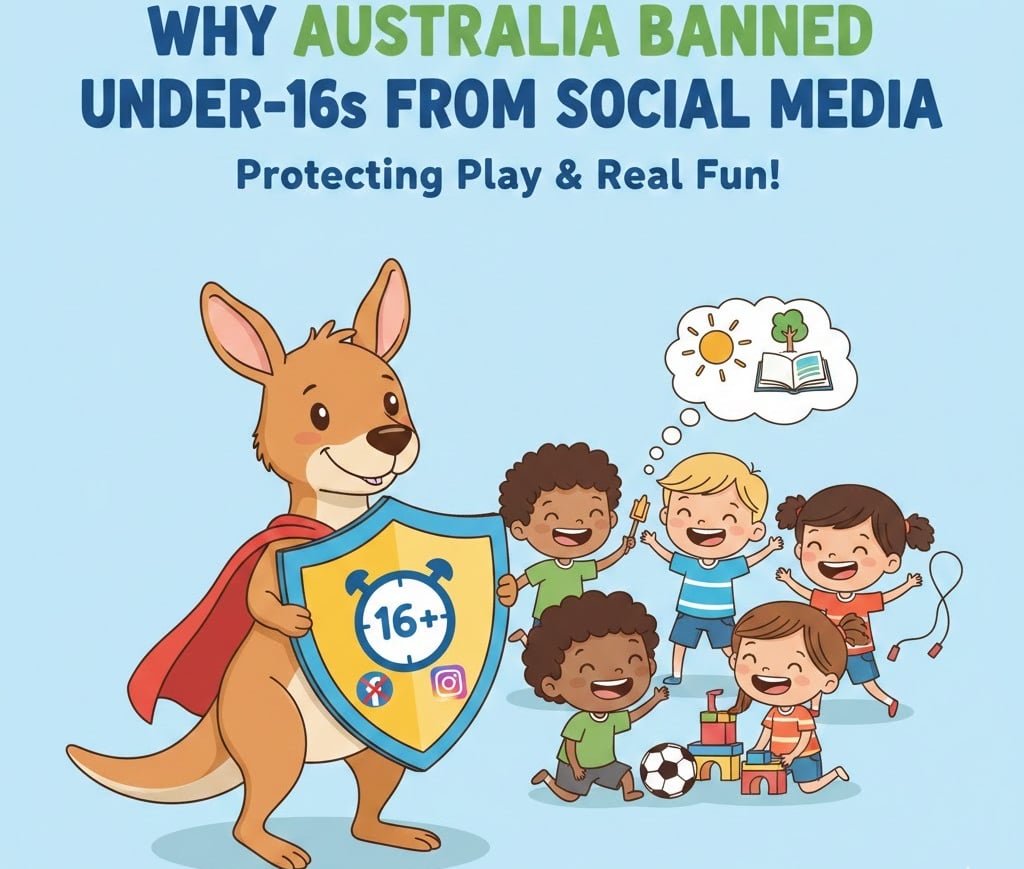
Starting December 10, social media companies in Australia will have to take “reasonable steps” to make sure kids under 16 cannot make accounts. They will also have to remove existing under-16 accounts.
This rule applies to:
Instagram
TikTok
Snapchat
Facebook
YouTube
Reddit
X (formerly Twitter)
Twitch
Kick
Threads
To read more about why the Australian government decided to act visit this article: https://www.bbc.com/news/articles/cjllx7pwn4po
What the research showed
96% of kids ages 10–15 use social media
7 out of 10 said they saw harmful content
examples: violent videos, misogynistic posts, eating disorder content, self-harm or suicide content
1 in 7 said someone had tried to groom them
More than half said they’d been cyberbullied
The government said this content is everywhere, and kids often see it even when they aren’t looking for it. They also said many apps are designed to keep kids scrolling longer, which can affect their health and mental well-being.
To enforce the ban, companies may use tools like:
ID checks
Face or voice recognition
AI that guesses age based on behavior
Kids and parents will not be punished for breaking the rule—only the companies will.
Europe Is Also Moving Toward Similar Rules
Europe hasn’t banned kids from social media, but the European Parliament recently passed a resolution pushing for stronger protections for kids online. This includes exploring ideas like:
Stricter age checks
Limits on harmful content
Possible under-16 rules in the future
You can read this article here:
https://www.theguardian.com/technology/2025/nov/26/social-media-ban-under-16s-european-parliament-resolution
Some European countries, like Denmark and Norway, have already said they are considering bans for kids under 15. France recommended a ban for under-15s plus a “curfew” for 15–18-year-olds
Why This Matters to Families in the United States
Even though these laws aren't happening here, they show that many countries now believe:
Social media can be unsafe for kids
Apps aren’t protecting children well enough
Parents need help setting boundaries
In the U.S., there is no national rule about how old kids must be to use social media, so each family has to make decisions on their own.
Here’s what U.S. parents may want to keep in mind:
What U.S. Parents Should Do Right Now
1. Talk openly with your kids about what they see online
Studies show harmful content is extremely common. Having regular conversations helps kids know what to do if something scares them or makes them uncomfortable.
2. Check which apps your child is actually using
Some kids use:
Finstas (fake Instagram accounts)
Gaming chats that work like social media
Anonymous chatting apps
If they can message people or share videos, it counts as social media.
3. Put safety settings on devices
Use:
Apple Screen Time
Google Family Link
Router filters (like Gryphon or Eero Secure)
Safe search settings on Google, YouTube, and TikTok
These tools won’t solve every problem, but they lower risks.
4. Be aware of AI chatbots
Europe raised concerns about AI systems that:
Talk to kids in inappropriate ways
Encourage risky behavior
Give unsafe advice
Teach kids:
AI is not a real friend
AI can make mistakes
Never share personal information with it
5. Prepare for possible changes from social media companies
Because Australia and Europe are making new rules, companies may soon start asking U.S. users for:
Selfies
Video age checks
Parental verification
Talk with your child so they’re not surprised if this happens.
Final Thoughts
Other countries are taking big steps because the online world has changed fast—and kids are often seeing things they’re not ready for.
You don’t have to ban everything. You don’t have to supervise every minute. But staying involved, staying curious, and talking with your child often can make a huge difference.
Cybersecurity Parents LLC
Empowering families to navigate the digital world.
Email us
© Cybersecurity Parents LLC 2025. All rights reserved.

All content, materials, and sessions provided by Cybersecurity Parents LLC are intended for informational and educational purposes only.
They do not constitute legal, financial, or cybersecurity advice. Parents, educators, and participants should use their own judgment and, when necessary, consult with a qualified professional. By participating in our events, reading our materials, or using our resources, you acknowledge and agree that Cybersecurity Parents LLC is not liable for any actions you take or outcomes resulting from the use or misuse of our content.